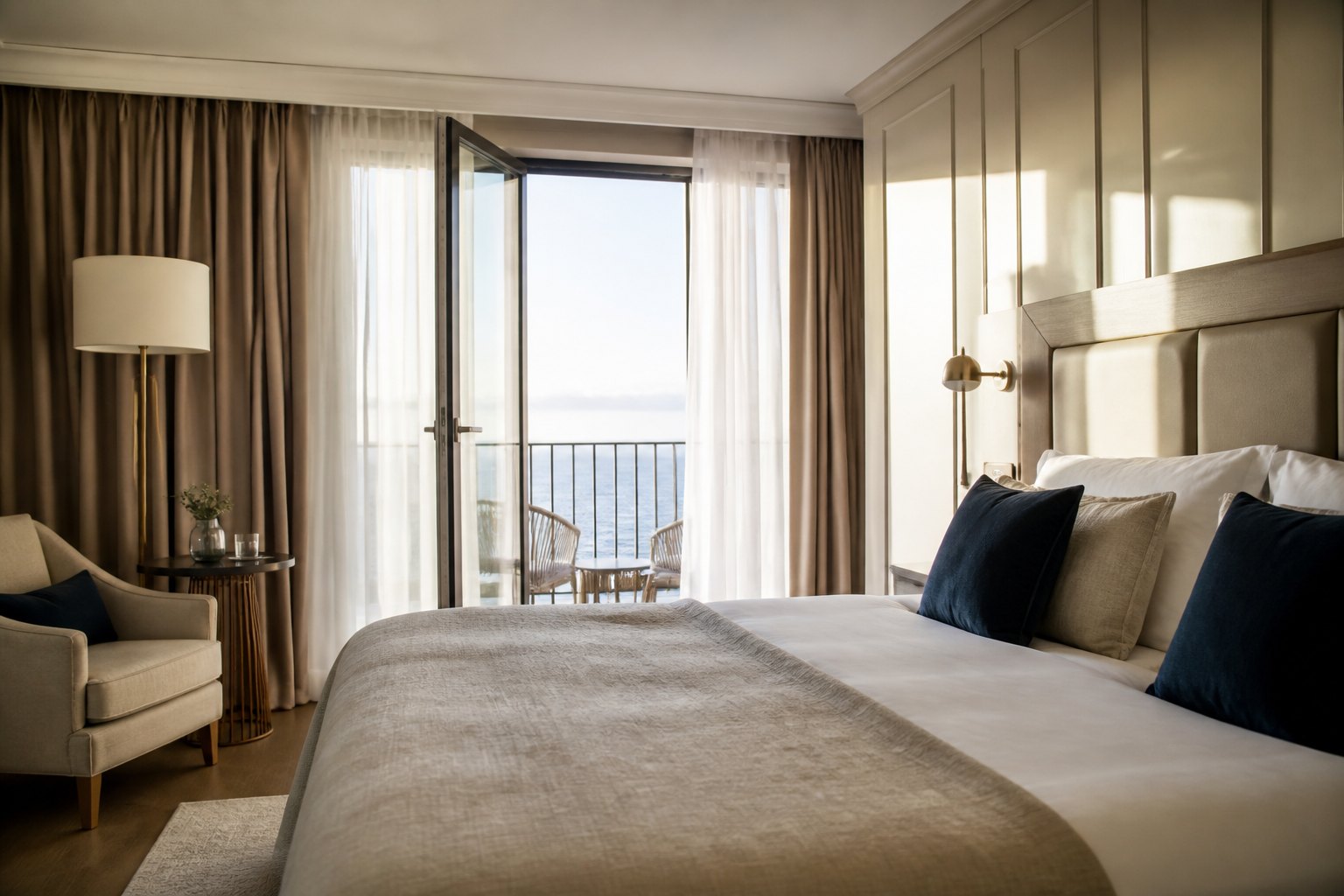
Coast · Poland
Hotels for sale in Sopot
Sopot is small, expensive and effectively closed to new supply — which is precisely the combination that makes it interesting. It commands the highest rates on the Polish coast, and land in the seafront strip changes hands rarely enough that comparable transactions barely exist.
Rate premium, short season
The town supports rates that no other Polish coastal market reaches, but the peak is short and the shoulder months depend on spa, wellness and events business rather than on the beach.
For valuation, this means the annual figure hides a great deal. What matters is how much revenue is generated outside July and August, because that portion is what a buyer capitalises at a lower risk premium.
Supply that cannot grow
The seafront strip is built out, the town is physically small and planning constraints are strict. New capacity is rare and almost always involves conversion rather than new construction.
Those constraints have a specific source that is easy to miss: Sopot has held statutory spa status since 1999, and its protection zones cover effectively the whole town. The municipal spa statute, not only the local plan, decides what may be built and which activities are permitted — obtain it before modelling any extension.
That scarcity supports values through weaker cycles, but it also caps what an investor can do with an asset once bought. Plans that depend on adding rooms should be tested against the local plan before, not after, an offer.
What the spa statute forbids
The exact permitted use and any conservation status of the building, since much of the attractive stock is historic. Then the proximity premium: how the rate structure changes between properties two streets apart, which in Sopot is measurable and significant.
Finally the events and spa contribution. In a market with a short peak, a property that fills October with conferences is a different asset from one that closes.
The Polish-language page for this market is written for owners considering a sale and covers the same territory from the other side: sprzedaż hotelu — Sopot.
Frequently asked questions
Is Sopot a year-round market?
Partly. The spa and events business keeps the better properties working outside summer, but the depth is nothing like a city market. Treat any year-round claim as something to verify in the monthly figures.
Are the entry prices justified by the yields?
Often not on a pure income basis — land value is a large part of what you buy. Investors who evaluate Sopot solely on capitalised earnings usually judge it expensive — fair enough, if income is all you are buying.
General information, not legal, tax or investment advice. Polish law as at July 2026; tax classification and administrative practice change, and any specific transaction requires a Polish lawyer or tax adviser.
Other markets
Gdańsk
Gdańsk combines urban year-round demand with a Baltic summer season. What that dual character means for valuation and risk.
CoastKołobrzeg
Poland's largest coastal spa town: contracted health stays alongside leisure demand, and a season that runs through spring and autumn rather than the ten weeks the rest of the Baltic coast lives on.
CoastŚwinoujście
A Baltic spa town on the German border with the highest share of foreign guests on the Polish coast. Demand, seasonality and risks.
CitiesKraków
Poland's strongest city hotel market: year-round international demand, tight supply in the old town and the highest entry prices outside Warsaw.
CitiesWarsaw
The deepest hotel market in Poland: corporate and conference demand, institutional buyers and the tightest yields in the country.
CitiesWrocław
A city market driven by outsourcing, conferences and student demand, with lower entry prices than Kraków and a similar demand structure.
Register your criteria
Budget, region, size and intended operating model. Properties reach investors one at a time, after a confidentiality agreement — never through a public listing.