Spa towns · Poland
Hotels for sale in Polanica-Zdrój
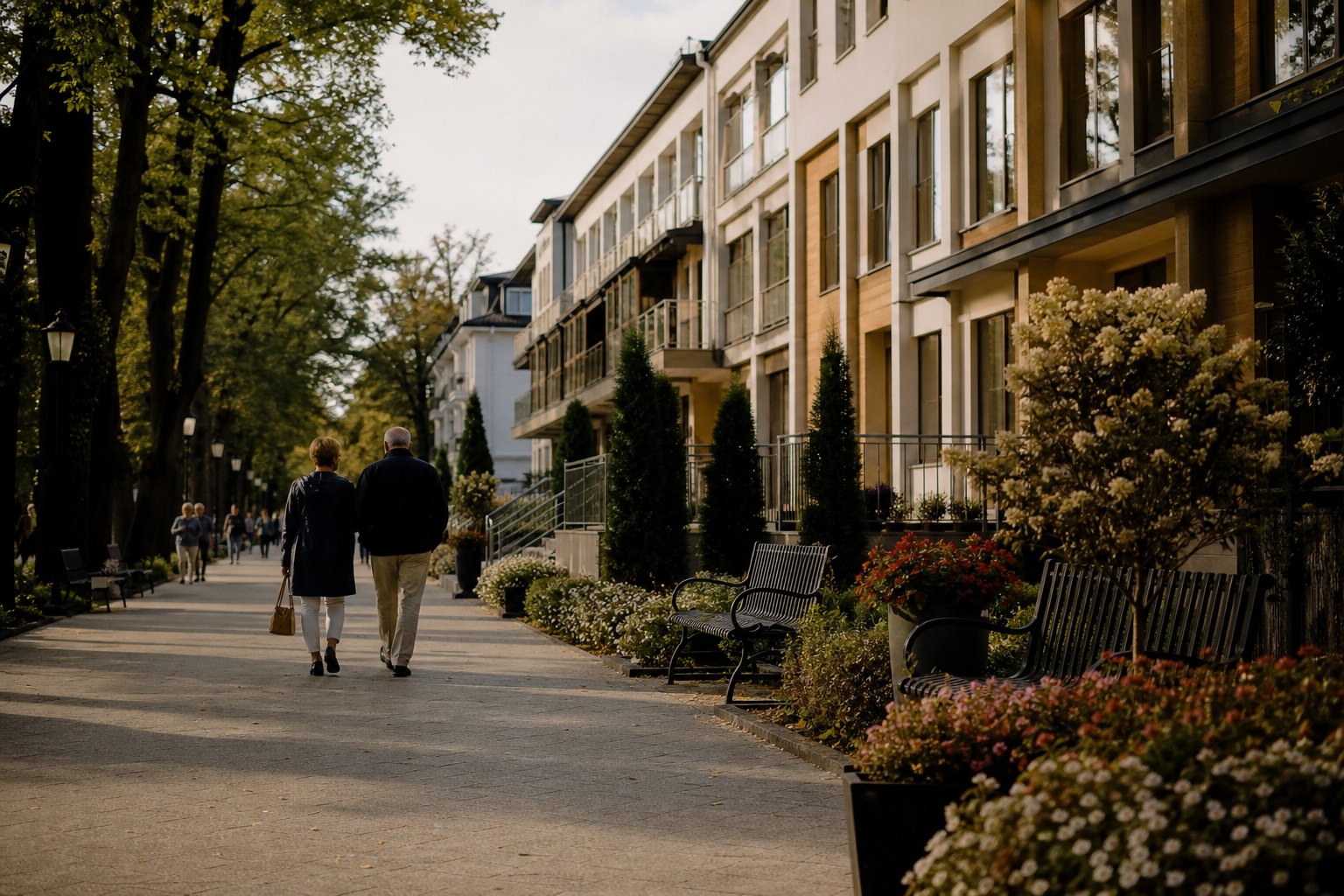
Polanica is the calmest of the Kłodzko Valley spa towns, built around a park rather than around a ski lift. Demand is treatment-led, evenly spread and unspectacular — which for the right investor is exactly the point.
A flat year, by design
Treatment and wellness stays run through the year and are largely indifferent to weather. There is no winter peak to speak of and no summer collapse; the curve is flatter than almost anything in the Polish mountains.
That predictability is what a buyer pays for. It also means the upside is limited: this is not a market where repositioning produces a step change in rate.
The park is the product
The spa park, the pump room and the surrounding walking routes are why guests come and why they return. Proximity to them moves rate more than the standard of the rooms does — a walk of five minutes and one of twenty are two different products.
For a property away from the park, the compensation has to be something specific — treatment facilities, catering, grounds. If it works, the rate shows it.
Treatment infrastructure and the contracted share
The treatment wing is examined the same way everywhere: equipment, servicing, qualifications. What is missing there costs revenue from the day of completion, because part of the offering stands idle.
Then the split between publicly contracted stays and commercial sales. A property leaning heavily on the first has stable revenue it cannot influence, and that is valued more cautiously.
Two employers, and the demand they bring
Polanica has a supra-regional specialist hospital — a referral centre for neurosurgery and cardiology — and the Staropolanka bottling plant, and both matter commercially. The hospital generates accompanying-family stays and medical-staff bookings that have nothing to do with the tourist calendar and sit in the weeks when a resort town is quiet.
Ask whether that business is actually in the books or merely nearby. A property that has built relationships with the hospital shows it in midweek occupancy from October to March; one that hasn't is simply a hotel in the same town.
The Polish-language page for this market is written for owners considering a sale and covers the same territory from the other side: sprzedaż hotelu — Polanica-Zdrój.
Frequently asked questions
Is the absence of a ski area a disadvantage?
It removes a winter peak and the risk that comes with it. Whether that is good depends on what you are buying: predictable earnings at a lower multiple, or a seasonal business with more upside and more variance.
How deep is the buyer pool?
Thinner than on the coast, with private investors dominating. Documented three-year results carry more weight here than in markets with frequent comparable transactions.
General information, not legal, tax or investment advice. Polish law as at July 2026; tax classification and administrative practice change, and any specific transaction requires a Polish lawyer or tax adviser.
Other markets
Krynica-Zdrój
Poland's best-known spa town combines treatment-based demand with a ski area, producing an unusually even year for the Polish mountains.
Spa townsUstroń
One of only two statutory spa towns in the Silesian voivodeship, within easy reach of Katowice. Demand, constraints and what to check.
Spa townsKudowa-Zdrój
Statutory spa status combined with cross-border traffic to Czechia. Two demand streams with very different risk profiles.
CitiesKraków
Poland's strongest city hotel market: year-round international demand, tight supply in the old town and the highest entry prices outside Warsaw.
CitiesWarsaw
The deepest hotel market in Poland: corporate and conference demand, institutional buyers and the tightest yields in the country.
CoastGdańsk
Gdańsk combines urban year-round demand with a Baltic summer season. What that dual character means for valuation and risk.
Register your criteria
Budget, region, size and intended operating model. Properties reach investors one at a time, after a confidentiality agreement — never through a public listing.